Árpád Szabó’s Revolutionary Discovery
The Mystery That Changed Everything
How did mathematics transform from practical calculations—measuring fields, building pyramids—into the rigorous, proof-based science we know today? For centuries, scholars assumed it was a gradual evolution from Egyptian and Babylonian techniques. Then Hungarian classical philologist Árpád Szabó made a startling discovery that overturned this conventional wisdom.
By analyzing the actual Greek terminology used in ancient mathematical texts, Szabó uncovered something unexpected: axiomatic mathematics didn’t evolve from practical calculation at all. It emerged suddenly from philosophical debate.
Szabó’s Detective Work
Árpád Szabó (1913-2001) brought a unique approach to this historical puzzle. As a classical philologist, he could trace the precise meanings and evolution of Greek mathematical terms. What he found was revolutionary: the language of Greek mathematics was borrowed directly from the vocabulary of philosophical argument.

The very structure of mathematical proof—proposition, demonstration, conclusion—mirrors the format of philosophical dialectic. Terms like “axiom” (that which is worthy of belief) and “theorem” (that which is observed) originated not in computational practice but in philosophical discourse about knowledge and truth.
The Eleatic Connection
Szabó’s breakthrough was identifying the specific philosophical source: the Eleatic school, particularly Parmenides and Zeno. These philosophers developed techniques of indirect proof (reductio ad absurdum) to defend their radical claims about the nature of reality.
Greek mathematicians adopted these logical methods wholesale. What had been tools for philosophical argument became the foundation of mathematical demonstration. This explains why Greek mathematics focused on proof rather than computation, and why geometry (with its visual clarity) dominated over arithmetic (with its troubling infinities).

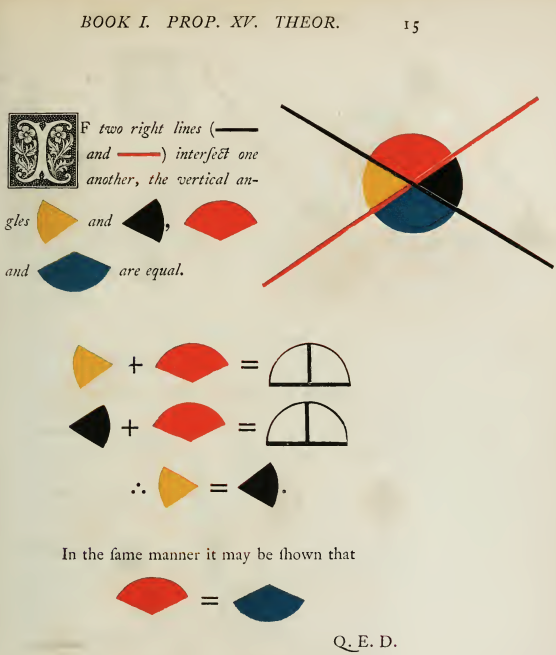
Szabó’s detailed analysis of Euclid’s Elements reveals how deeply this philosophical influence shaped mathematical practice. By examining the structure and terminology of Euclid’s definitions, postulates, and proofs, Szabó demonstrated that the Elements represents not just a mathematical achievement but the culmination of applying dialectical methods to geometry. The work’s axiomatic structure—starting from first principles and building through rigorous demonstration—directly reflects the Eleatic approach to philosophical argumentation.
Why This Matters
Szabó’s discovery explains several puzzling features of Greek mathematics:
Why it emphasized proof over practical application
Why geometric methods dominated until the modern era
Why mathematics developed theoretical rigor rather than computational power
How the axiomatic method emerged so suddenly and completely
More broadly, Szabó revealed that mathematical thinking isn’t simply “natural” human reasoning refined—it’s a specific intellectual technology borrowed from philosophical debate and applied to mathematical problems.
The Lakatos Connection
This historical insight profoundly influenced Imre Lakatos, Szabó’s former student who became a leading philosopher of mathematics at the London School of Economics. Lakatos extended Szabó’s work in “Proofs and Refutations,” showing how mathematical knowledge continues to grow through something resembling debate—conjecture, criticism, and refinement.

For Lakatos, Szabó’s historical analysis provided crucial evidence that mathematics isn’t a purely deductive enterprise but involves ongoing dialectical processes.

Reading Szabó Today
English readers can explore these ideas in “The Beginnings of Greek Mathematics” (1978), where Szabó presents his most comprehensive analysis. The work combines rigorous philological scholarship with accessible explanations of how philosophical methods transformed mathematical practice.
For context on the Eleatic philosophers whose methods proved so influential, Kirk, Raven, and Schofield’s “The Presocratic Philosophers” provides excellent background with original texts and commentary.
Why Szabó’s Work Still Matters
Szabó’s research offers more than historical insight. It reveals that rigorous thinking—the foundation of science—emerged from the intersection of different intellectual traditions. Mathematics became a science not through isolated technical development but through the creative application of philosophical methods to mathematical problems.
This understanding remains relevant as we continue to grapple with questions about how knowledge develops and how different ways of thinking can illuminate each other. Szabó showed us that some of humanity’s greatest intellectual achievements arise not from specialization but from the bold combination of different approaches to understanding reality.
Leave a Reply