I recently found myself reflecting on Central Europe’s intellectual legacy after a conversation with an old friend who moved his business to New York. His decision made me wonder: could our region once again become the kind of intellectual powerhouse it was a century ago? This question led me to explore the extraordinary concentration of genius that emerged from Central Europe in the late 19th and early 20th centuries – a flowering of thought that fundamentally shaped our modern world.
The innovations that define contemporary life – from the architecture of computers to game theory, from psychoanalysis to modern economics – emerged from this small collection of nations between Germany and Russia. While these contributions are often overlooked or attributed to the countries where these thinkers later emigrated, their Central European origins reveal a remarkable story about how intellectual revolutions happen.
What Was Central Europe?
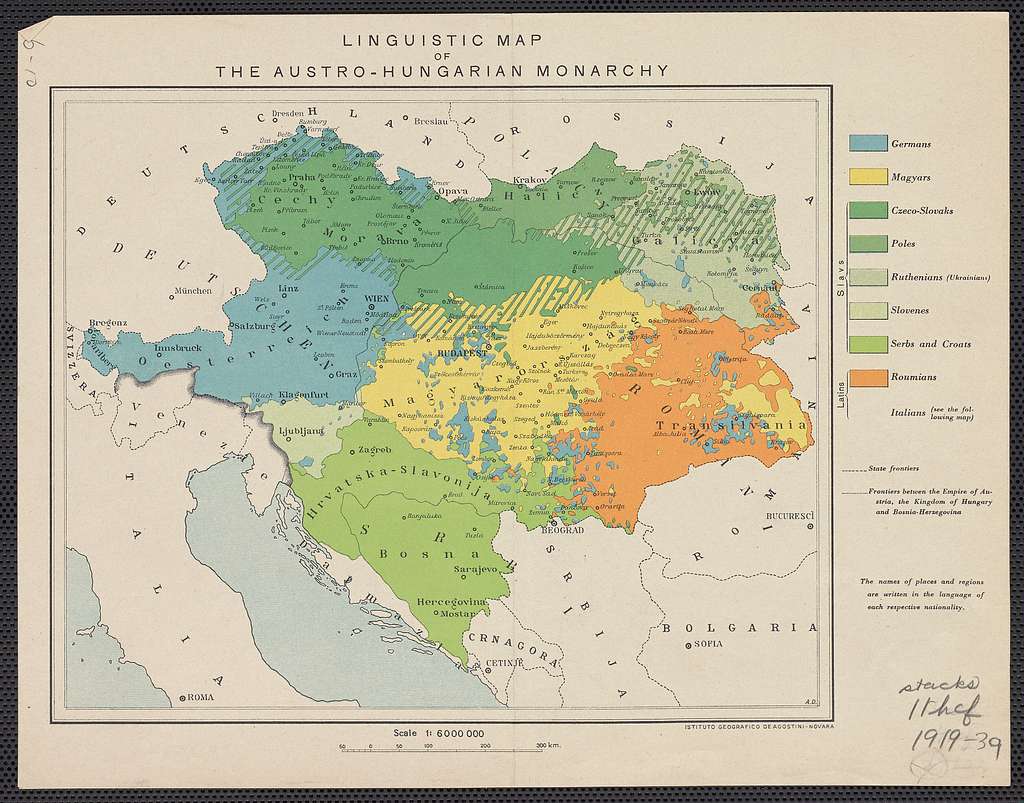
For our discussion, Central Europe encompasses Poland and the successor states of the Austro-Hungarian Empire. Yet beyond geography, I embrace Milan Kundera’s elegant definition of Central Europe as “maximum diversity in minimum space” – not merely a place but “a culture or a fate.” It represents a zone of small nations whose identity is centered on cultural and intellectual values rather than power.
This cultural space created interconnected intellectual hubs in Vienna, Budapest, Prague, Warsaw, and Lviv/Lemberg, where ideas flowed across linguistic and cultural boundaries through universities, coffeehouses, and publishing houses.
The digital devices you use, the economic systems that govern our lives, the psychological concepts we use to understand ourselves – all trace their origins to this brief but extraordinary explosion of Central European brilliance.
Vienna: Logic, Economics, and the Human Mind
Vienna became an intellectual powerhouse across multiple disciplines:
The Vienna Circle transformed our understanding of science and knowledge itself. Kurt Gödel’s incompleteness theorems revolutionized mathematics by demonstrating the inherent limitations of formal systems. Rudolf Carnap and Moritz Schlick developed logical positivism, laying the groundwork for new foundations in scientific inquiry.
Ludwig Wittgenstein revolutionized philosophy of language, first with his Tractatus Logico-Philosophicus, then with his Philosophical Investigations, fundamentally changing how we understand meaning and language.
Karl Popper’s concept of falsifiability – the idea that scientific theories must be capable of being proven wrong – remains the cornerstone of the scientific method. His theory of the “open society” provided a robust philosophical defense of democracy against totalitarianism. As a professor at the London School of Economics, Popper influenced generations of students, including George Soros, whose Open Society Foundations would later promote democratic values globally.
The Austrian School of Economics, through Ludwig von Mises, Friedrich Hayek, and Joseph Schumpeter, developed theories of market dynamics, business cycles, and “creative destruction” that continue to influence economic policy worldwide.
Sigmund Freud’s psychoanalysis transformed our understanding of the human mind, introducing concepts like the unconscious that remain fundamental to psychology and popular culture.
Budapest and Hungarian Thinkers
The “Hungarian phenomenon” in mathematics produced an astonishing concentration of genius, including:
John von Neumann created game theory, designed the computer architecture still used today, and made fundamental contributions to quantum mechanics, economics, and early artificial intelligence.
Paul Erdős revolutionized combinatorics and graph theory through hundreds of collaborations, becoming one of history’s most prolific mathematicians.
Sándor Ferenczi pioneered innovative therapeutic approaches that anticipated developments in modern psychotherapy decades ahead of his time.
The Polányi brothers made transformative contributions across disciplines. Michael (Mihály) Polányi’s concept of “tacit knowledge” – the idea that “we know more than we can tell” – revolutionized our understanding of how knowledge works in practice. His insight that crucial aspects of human knowledge cannot be fully articulated has become fundamental to management studies, education, and artificial intelligence. Meanwhile, Karl Polányi’s “The Great Transformation” provided influential critiques of market society that continue to shape economic sociology.
Imre Lakatos from Debrecen, who later moved to Budapest and eventually London, made profound contributions to the philosophy of mathematics and science. His “Methodology of Scientific Research Programmes” refined Popper’s ideas about scientific progress, while his “Proofs and Refutations” transformed our understanding of mathematical discovery and proof. At the London School of Economics, he formed part of a remarkable concentration of Central European thinkers who reshaped philosophical thinking in the English-speaking world.
John Harsanyi extended game theory to situations of incomplete information, work that earned him a Nobel Prize and transformed economic analysis.
Eugene Wigner, Edward Teller, and Leo Szilard later played crucial roles in nuclear physics and the Manhattan Project.
Abraham Wald, from Transylvania, developed statistical methods that revolutionized decision theory before his untimely death in a 1950 plane crash.
The Language Revolution from Prague
The Prague Linguistic Circle revolutionized our understanding of communication itself. Led by Roman Jakobson and Vilém Mathesius, they developed structural linguistics and phonology that revolutionized fields from anthropology to literary theory.
Their approach to language as a structured system with functions beyond mere communication laid the groundwork that would later influence information theory and computer science. Their concepts of “marked” versus “unmarked” forms and the “aesthetic function” of language remain fundamental to understanding how communication works.
Poland’s Mathematical and Logical Innovations
The Lwów–Warsaw School of mathematics and logic, with Lwów (now Lviv) being part of Austria-Hungary until 1918, produced extraordinary breakthroughs. Stefan Banach revolutionized functional analysis with his work on vector spaces, creating mathematical tools that remain essential in physics and engineering.
Alfred Tarski transformed mathematical logic with his semantic theory of truth, providing a precise framework for understanding how formal language relates to reality, work that later became foundational to computer science and artificial intelligence.
Most critically for modern security, Polish mathematicians Marian Rejewski, Jerzy Różycki, and Henryk Zygalski made the first crucial breakthroughs in breaking the German Enigma code – work that would later prove vital to the Allied victory in World War II and establish foundations for modern cryptography. Their innovations in combinatorial mathematics and mechanical computing anticipated developments that would transform the field of information security.
The Great Migration and Its Consequences
The tragic irony of this intellectual flourishing is that rising antisemitism and fascism forced many of these brilliant minds to flee to the United States and the United Kingdom. This created one of the most significant intellectual migrations in history, fundamentally reshaping Western science.
Von Neumann, Wigner, Teller, and others contributed to the development of nuclear energy and early computing. The Austrian economists transformed American economic policy. Logical positivism reshaped Anglo-American philosophy.
What began in Central Europe was completed in America and Britain, with the region’s original contributions often obscured by this displacement.
The End of an Era
The golden age of Central European thought came to an end through a confluence of devastating forces. The rise of virulent nationalism and antisemitism tore apart the multicultural fabric that had nurtured such innovation. The Nazi occupation destroyed intellectual communities, with many Jewish thinkers murdered in the Holocaust. After World War II, Soviet domination imposed ideological constraints on intellectual freedom across much of the region, severing connections with Western academic traditions and stifling the free exchange of ideas.
The Iron Curtain effectively completed what fascism had begun – the dismantling of Central Europe’s unique intellectual ecosystem. Universities that had fostered revolutionary thinking became instruments of state ideology. The multilingual, cosmopolitan character that had defined the region was replaced by forced homogenization and isolation.
Why Central Europe?
While the Habsburg Monarchy had serious flaws – particularly regarding national minorities – it created a uniquely cosmopolitan environment where intellectual exchange flourished across boundaries. Its educational institutions, cultural infrastructure, and urban centers provided spaces where brilliant minds from diverse backgrounds could interact and innovate.
Even after the Empire’s collapse, successor states maintained some of this intellectual infrastructure until fascism and Nazism rose in the region. This complex, multi-ethnic environment, despite its tensions, proved extraordinarily fertile for revolutionary thinking.
Legacy and Future Potential
The movement of talent has always been part of Central European intellectual life – from students traveling to German universities in earlier centuries to today’s researchers working across the continent and beyond. The European project itself, with programs like Erasmus, celebrates this free movement of people and ideas.
Our challenge isn’t to prevent this natural flow but to create environments where talent can flourish here, where those who gain experience abroad might return, and where we attract bright minds from elsewhere. Brain circulation rather than brain drain becomes possible when we build on our strengths.
The question isn’t whether we can recreate this golden age, but how we might learn from it to foster innovation today. The traditions that made this possible – intellectual openness, cross-disciplinary exchange, cultural diversity, educational excellence – remain part of our heritage.
Central Europe’s remarkable past offers not just pride but practical lessons. Our region once revolutionized human knowledge not through military or economic might, but through the power of ideas. By consciously engaging with this legacy while addressing contemporary challenges, we might once again become a source of innovations that shape the future.
Leave a Reply