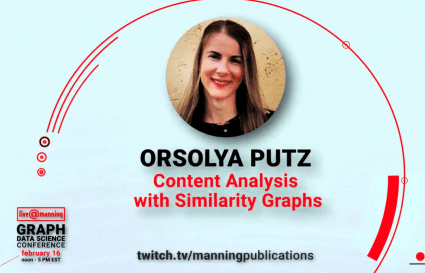
We had the opportunity to present our thoughts on content analysis with similarity graphs at the Graph Data Science conference. Below, you can watch our presentation and other useful materials to get started with similarity graphs.
(more…)Tag: Python
-
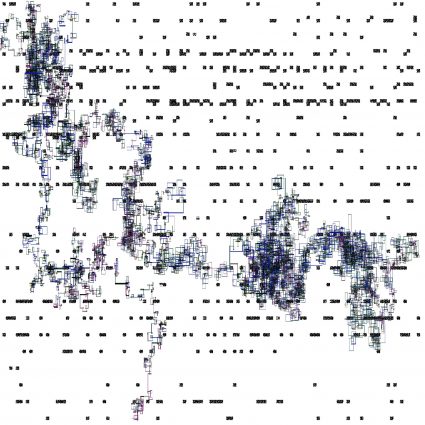
Graph Theory and Network Science for Natural Language Processing – Part 4, TextGraphs & Graph Neural Networks
We close our series on Graph Theory and Network Science for NLP with an overview of the recent developments in the field. It means deep learning enters the scene – finally.
(more…) -
How Jina Saves Your Time on Building Cloud-Native Neural Search Systems
Today, with the ever more long documents and multimedia data, finding the right information is more important and challenging than ever. The rise of deep learning has ushered in a new era of “neural search”. However, building a neural search system is non-trivial work for many engineers. The main challenges are: (1) long dev cycle due to the complex tech stack (2) poor scalability due to the glued-architecture (3) strong requirements on the domain knowledge to fine-tune the results. With Jina (https://github.com/jina-ai/jina), engineers can quickly build up a search engine powered by state-of-the-art AI in just minutes. In this talk, I will introduce the design philosophy and the key features of Jina; and showcase how Jina bootstraps a QA semantic search system and a short-video search system in just lines of code.
(more…) -

Graph Theory and Network Science for Natural Language Processing – Part 2, Databases and Analytics Engines
From keyword extraction to knowledge graphs, graph and network science offer a good framework to deal with natural language. We love using graph-based methods in our work so much, like generating more labeled data, visualizing language acquisition and shedding light on hidden biases in language, that we decided to start a series on the topic. The first part explored the theoretical background of network science and dealt with graphs using Python. This part focuses on graph processing frameworks and graph databases.
(more…) -
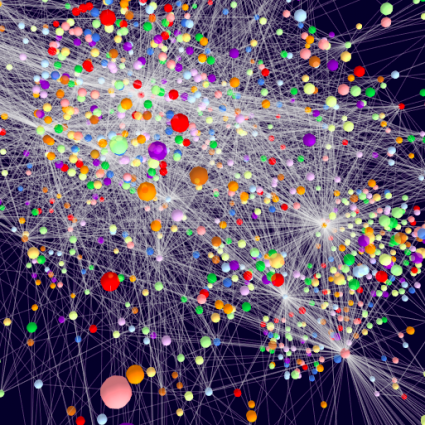
Graph Theory and Network Science for Natural Language Processing – Part 1
From keyword extraction to knowledge graphs, graph and network science offer a good framework to deal with natural language. We love using graph-based methods in our work, like generating more labeled data, visualizing language acquisition and shedding light on hidden biases in language. This series gives you tips on how to get started with graph and network theory, which Python tools to use, where to look for graph databases and how to visualize networks, finally we offer a few resources on Graph Neural Networks.
(more…)