
Category: Uncategorized

  • Vices and Virtues of AI

    Vices and Virtues of AI

    Why Vibe Coding Policy Questions Is a Bad Idea (Just Ask the Swedish PM)

    Just a few weeks ago, Sweden’s Prime Minister Ulf Kristersson faced criticism after admitting he regularly consults ChatGPT for “second opinions” on policy matters. Tech experts condemned the practice, citing security risks—sensitive information uploaded to commercial AI platforms, potential data breaches, lack of oversight. Fair points. Sophisticated alternatives exist: classified AI systems like Palantir AIP, purpose-built government tools with proper security protocols.

    (more…)

  • Following the Power

    Following the Power

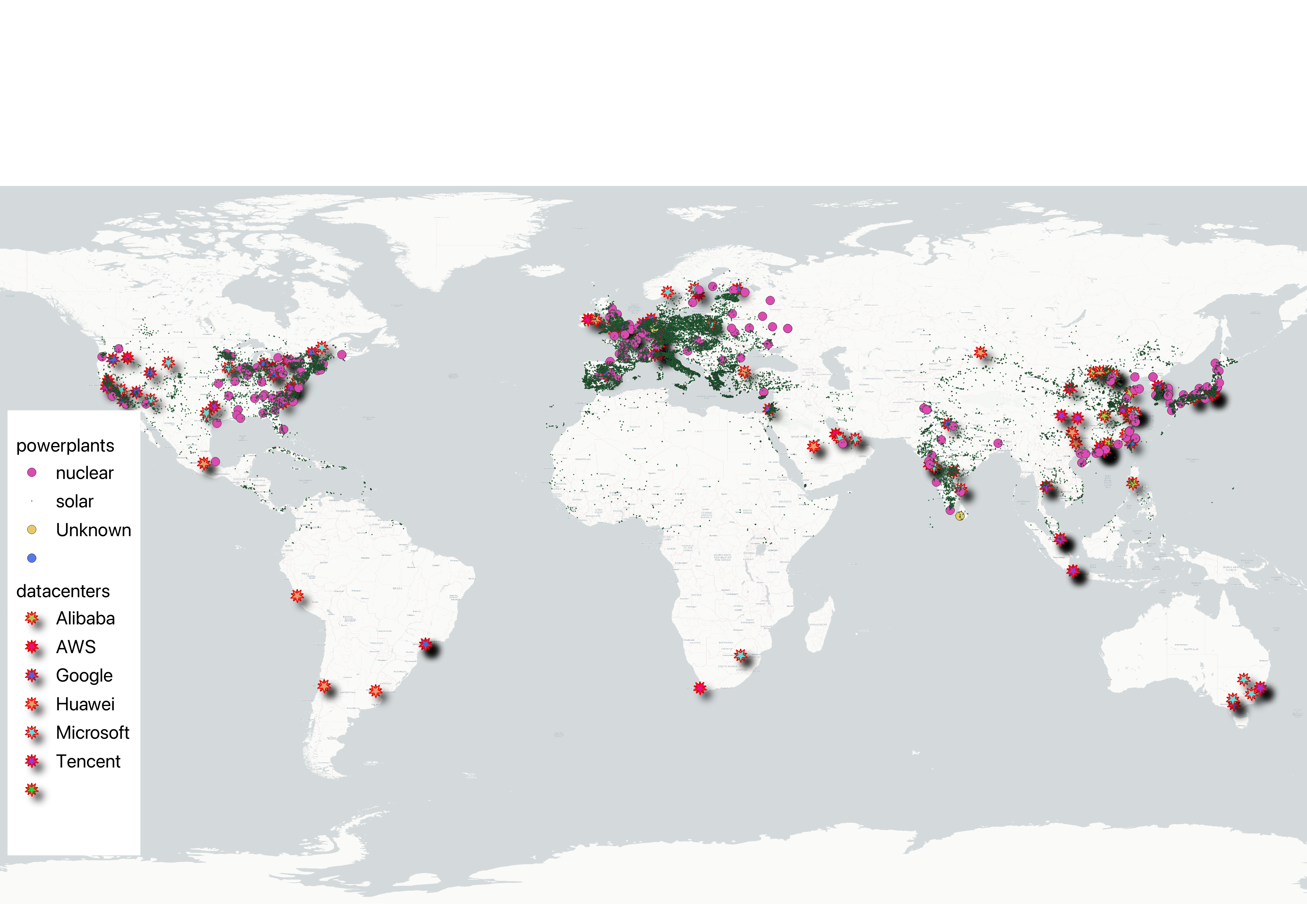
    How AI’s energy constraints are driving the infrastructure investments that will enable ubiquitous computing

    In 1865, economist William Stanley Jevons observed a paradox in Britain’s coal industry: as steam engines became more efficient and coal-powered technology advanced, total coal consumption increased rather than decreased. More efficient engines didn’t reduce coal demand—they made coal-powered applications economically viable in new contexts, from railways to factories to ships. The same pattern has repeated across every major energy transition since. As automobile engines became more fuel-efficient, total gasoline consumption soared because cheaper per-mile costs enabled more driving, more cars, and more applications for transportation.

    While Jevons’ paradox doesn’t apply universally—many efficiency gains do reduce total consumption—computing has consistently followed this pattern. Personal computers didn’t reduce total computing energy use; they made computation cheap enough for everyone. The internet didn’t decrease data transmission; it made information sharing ubiquitous.

    (more…)
  • The Living Word: Why AI Can’t Walk the Talk

    The Living Word: Why AI Can’t Walk the Talk

    Three years ago, in a bland office at Google’s headquarters, an engineer became convinced that the company’s chatbot had developed consciousness. Blake Lemoine’s widely publicized claims were swiftly dismissed, yet they exemplify a persistent muddle in society’s thinking about artificial intelligence. As language models like ChatGPT churn out increasingly convincing prose, a crucial question emerges: Have machines finally cracked the code of human language?

    The evidence seems compelling at first glance. Modern AI systems engage in witty banter, write passable poetry, and help craft legal briefs. This has led some tech evangelists to revive a bold claim first made by Chris Anderson, former editor of Wired magazine, in 2008: that with enough data, theory becomes unnecessary. “Correlation supersedes causation,” he declared, suggesting that patterns alone could reveal all there is to know about the world. Applied to language, this thinking suggests that by ingesting enough text, machines could master human communication.

    (more…)
  • Understanding the Predictive Mind: A Review of “Active Inference”

    Understanding the Predictive Mind: A Review of “Active Inference”

    If Andy Clark’s “The Experience Machine” showed us how our minds actively shape reality through prediction, then Parr, Pezzulo, and Friston’s “Active Inference” takes us deep into the mathematical engine room of cognition. This technical work reveals the precise mechanisms behind what Clark so elegantly described as our brain’s “controlled hallucination” of reality.


    At the heart of Active Inference lies the free energy principle, which explains how biological systems – from single cells to human brains – maintain their order and make sense of their world. It posits that all living systems work to minimize the difference between their internal model of the world and their sensory reality. By minimizing “variational free energy” in perception and “expected free energy” in action and planning, the framework elegantly explains how living systems can successfully navigate their world while maintaining their essential organization. Rather than passively processing information like a computer, our brains are constantly generating predictions about our environment and updating these predictions based on sensory evidence. The beauty of this principle lies in its universality: it applies equally to the simplest cellular organisms maintaining their chemical balance and to humans making complex decisions about their future.

    (more…)
  • Beyond Technical Skills: A Data Scientist’s Review of “Product Management in Practice”

    Beyond Technical Skills: A Data Scientist’s Review of “Product Management in Practice”

    As we conclude our series on essential books for technical professionals, let’s explore Matt LeMay’s “Product Management in Practice.” My journey to this book was personal: as data scientists increasingly collaborate with product managers, I’ve noticed a persistent gap in how we communicate our insights and findings effectively. The growing intersection between data science and product management prompted me to better understand the product manager’s perspective and responsibilities.

    I was particularly drawn to this book because of my previous experience with LeMay’s work. His book “Agile for Everybody” stands out as my favorite resource on agile practices – quite a statement given my general skepticism about the hype surrounding agile methodologies. LeMay’s practical, no-nonsense approach in that book gave me confidence that his take on product management would be equally insightful.

    (more…)