Tag: book

  • Computers Aren’t Magic: This 158-Page Book Explains Why

    Computers Aren’t Magic: This 158-Page Book Explains Why

    In our increasingly digital world, computers have become ubiquitous tools that most of us use daily without understanding their fundamental principles. Despite their complexity, the core ideas behind computing can be made accessible to anyone willing to learn.

    Article content

    Daniel Hillis’s “The Pattern on the Stone” stands as a remarkable gateway into computer science, distilling complex concepts into accessible explanations within just 158 pages. What makes this book exceptional is how it covers an impressive range of topics—from foundational Turing machines to elementary computer architectures, neural networks, and parallel computing—without requiring prior technical knowledge.

    (more…)

  • Equality, What It Means and Why It Matters

    Equality, What It Means and Why It Matters

    I recently finished reading “Equality: What It Means and Why It Matters,” which captures a fascinating conversation between Michael Sandel and Thomas Piketty at the Paris School of Economics (May 2024). While this book is relatively brief, it builds upon two of the most important works of recent years: Sandel’s “The Tyranny of Merit” and Piketty’s “A Brief History of Equality.”

    (more…)
  • Statistical Thinking as Philosophy: Essential Readings – Part I.

    Statistical Thinking as Philosophy: Essential Readings – Part I.

    “Philosophy of science without history of science is empty; history of science without philosophy of science is blind.” — Imre Lakatos

    Statistics isn’t just a collection of mathematical techniques—it’s a way of thinking about the world, addressing uncertainty, and drawing conclusions from incomplete information. As data scientists, machine learning engineers, and AI practitioners, we often apply statistical methods without reflecting on their theoretical foundations. Yet our work implicitly embodies philosophical stances about knowledge, evidence, and inference.

    This series presents foundational readings that shed light on the philosophical aspects of statistics. They are not intended to turn data practitioners into philosophers, but to offer accessible ways to reflect on the assumptions that underlie our daily work.

    (more…)
  • Book review: Data Structures the Fun Way

    Book review: Data Structures the Fun Way

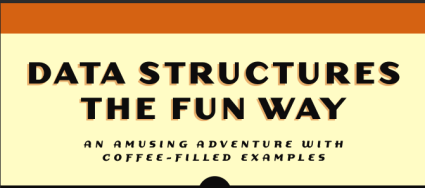
    These days when you can find a package for every problem you encounter, learning about algorithms and data structures seems to be a waste of time. But finding the right package or knowing the best data structure to handle your problem most efficiently cannot be achieved without knowing about data structures. Jeremy Kubica’s Data Structures the Fun Way is a fun intro to the topic for self-taught programmers and data scientists.

    (more…)