Category: philosophy

  • The Limits of Algorithmic Economic Planning: Why Data Can’t Replace Democracy

    The Limits of Algorithmic Economic Planning: Why Data Can’t Replace Democracy

    TL;DR

    Big Data and AI cannot solve the fundamental problems that have always plagued comprehensive social planning. Historical failures (Soviet shortages), philosophical limits (theory underdetermination), and reflexive feedback loops still apply to algorithmic systems. While machine learning excels in narrow, stable domains like meteorology and industrial optimization, it distorts complex social systems when given sweeping control over economic coordination. The dream of replacing democratic deliberation with algorithmic optimization ignores essential insights from economics, philosophy, and history about the nature of social knowledge and human choice.


    China’s government is building the world’s most ambitious experiment in data-driven governance. Under its new digital ID system, citizens submit facial scans and personal information to police databases, then use anonymized identities to access online services. The state maintains a comprehensive ledger of every person’s digital activity while companies see only streams of anonymous data. Chinese planners envision this as creating a unified national “data ocean” – treating data as a factor of production alongside labor, capital, and land. The goal is to harness unprecedented information flows to optimize economic coordination and social management through algorithmic systems.

    The dream of scientific management refuses to die. From Soviet planning bureaus to today’s tech evangelists promising “real-time economics,” each generation rediscovers the appeal of replacing messy human judgment with algorithmic precision.

    (more…)
  • What Money Already Bought: How Economic Narratives Rewired Our Language

    What Money Already Bought: How Economic Narratives Rewired Our Language

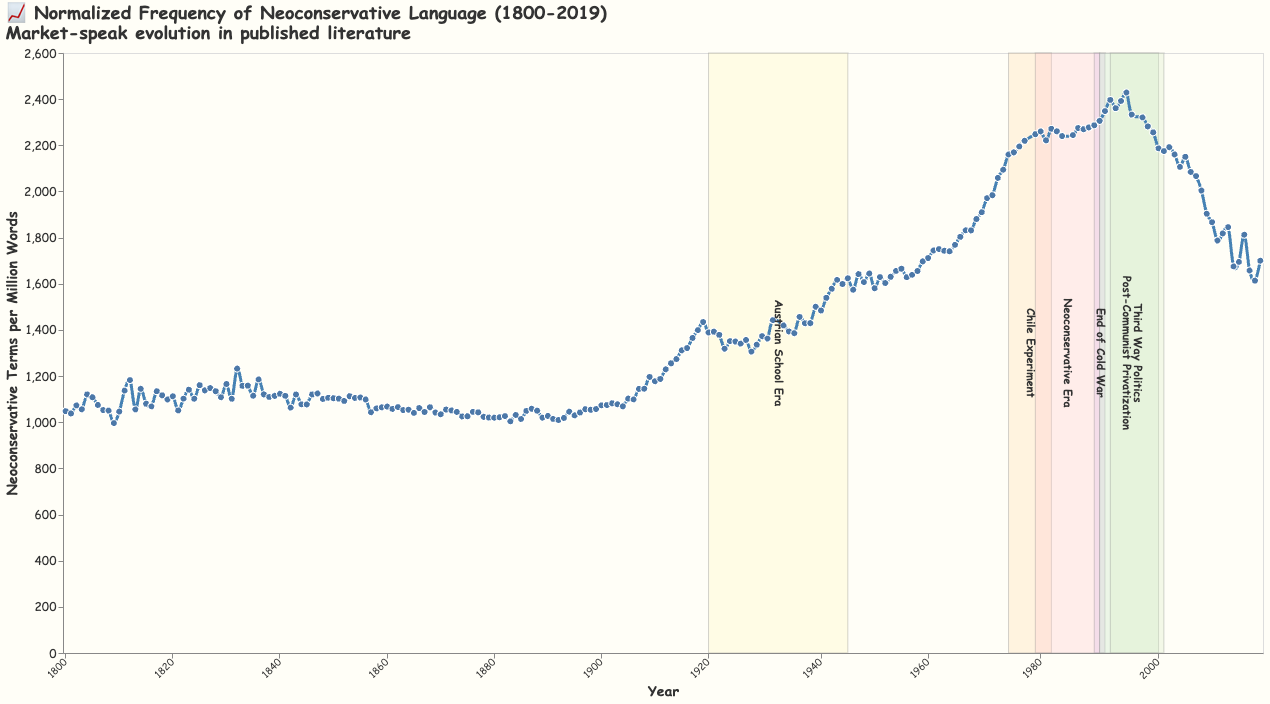
    Something curious happened to the English language in the 1980s. The word “privatisation” appeared in just 0.0000012% of all published words in 1940—barely a whisper in the literary landscape. By its peak, this had surged to 0.0008%—a 670-fold increase. “Incentivise” increased by 780 percent between 1940 and 2021. These numbers may seem tiny, but in the vast ocean of published language, they represent a seismic shift.

    An analysis of 200 years of published text reveals that the Reagan-Thatcher era marked the moment when economic jargon escaped the academy and colonised everyday discourse. What philosophers had suspected, data can now prove: market logic didn’t just reshape policy—it rewired how we think.

    (more…)
  • Narrative Wars: What Hunger Games Teaches Us About Information Control

    Narrative Wars: What Hunger Games Teaches Us About Information Control

    In his political essays, 18th-century Scottish philosopher David Hume, known for his empiricism and influential work on skepticism and political theory, made a penetrating observation about power: “Nothing appears more surprising to those who consider human affairs with a philosophical eye, than the easiness with which the many are governed by the few; and the implicit submission, with which men resign their own sentiments and passions to those of their rulers.”

    This insight – that rulers maintain control through “opinion” rather than force – seems eerily prescient in our current information landscape, where competing narratives battle for supremacy both between and within societies. With Suzanne Collins’ Hunger Games series receiving renewed attention through the release of “Sunrise on the Reaping,” we have a timely occasion to examine these dynamics through the lens of her dystopian world. Collins has explicitly cited Hume’s concept of “implicit submission” as her philosophical inspiration for the series, creating a fictional universe that takes information control to its terrifying logical conclusion.

    (more…)
  • Equality, What It Means and Why It Matters

    Equality, What It Means and Why It Matters

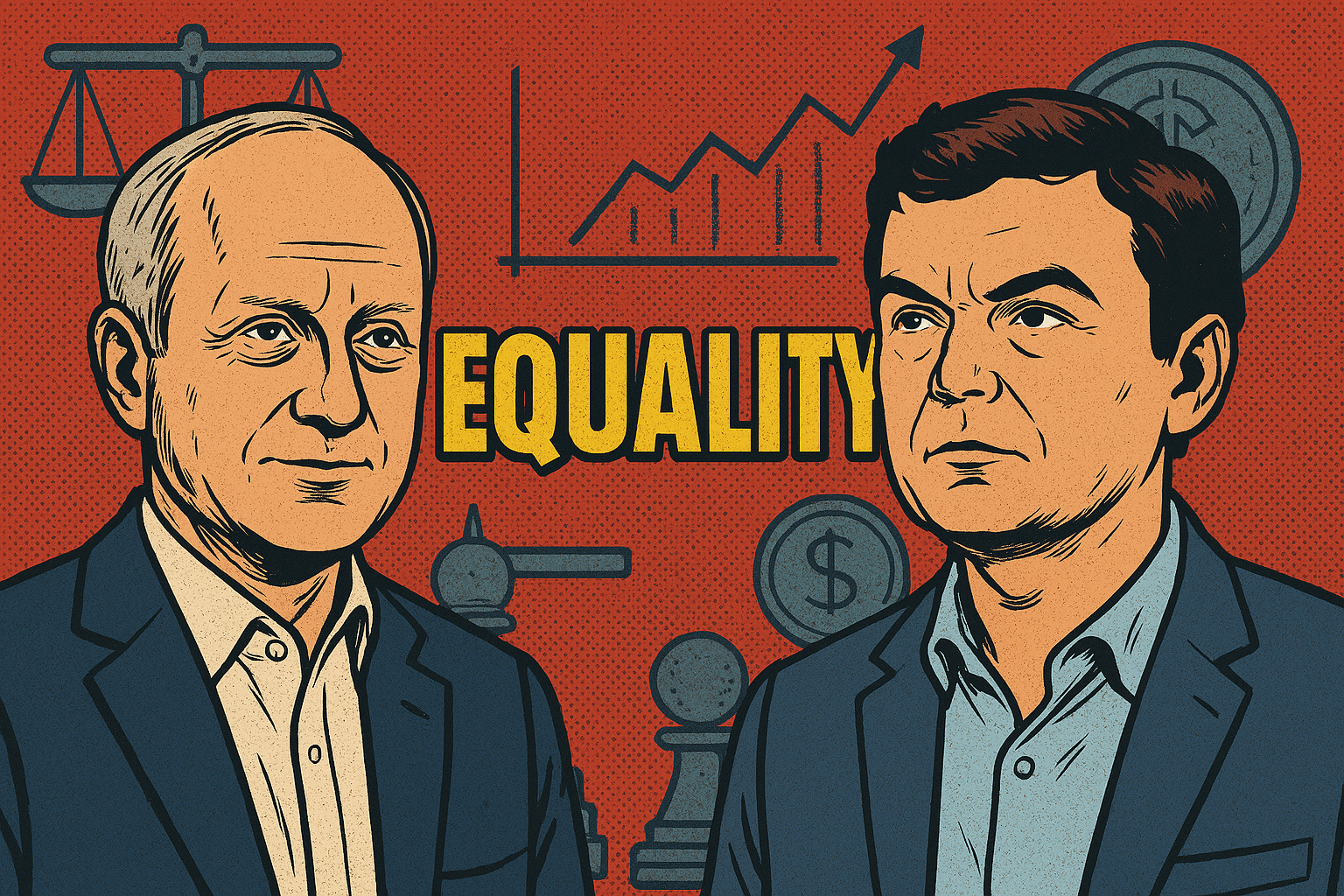
    I recently finished reading “Equality: What It Means and Why It Matters,” which captures a fascinating conversation between Michael Sandel and Thomas Piketty at the Paris School of Economics (May 2024). While this book is relatively brief, it builds upon two of the most important works of recent years: Sandel’s “The Tyranny of Merit” and Piketty’s “A Brief History of Equality.”

    (more…)
  • The Mindful Information Diet: A Stoic Approach to Modern Media

    The Mindful Information Diet: A Stoic Approach to Modern Media

    “The happiness of your life depends upon the quality of your thoughts.” This wisdom from Marcus Aurelius reminds us that attention is our most precious resource. In a world of infinite content, choosing what deserves our focus becomes an act of philosophy.

    The ancient Stoics understood that true wisdom comes not from absorbing everything, but from carefully selecting what deserves our attention. As Seneca advised, “To be everywhere is to be nowhere.” In our hyperconnected world, this warning has never been more relevant.

    What would Seneca think of our modern information landscape, where notifications ping incessantly and algorithms compete for every moment of our attention? I believe he would recognize it as the ultimate test of Stoic discipline—a constant exercise in choosing what truly matters.

    (more…)